Who loves not music and the heavenly muse, That man God hates.
So in all humours sportively I range; My muse is rightly of the English strain, That cannot long one fashion entertain.
The function of poetry is religious invocation of the Muse; its use is the experience of mixed exaltation and horror that her presence excites.
Where'er the oak's thick branches stretch A broader browner shade; Where'er the rude and moss-grown beech O'er-canopies the glade, Beside some water's rushy brink With me the Muse shall sit, and think.
Their name, their years, spelt by the unlettered muse, The place of fame and elegy supply: And many a holy text around she strews, That teach the rustic moralist to die.
Let others drink thee freely; and desire Thee and their lips espous'd; while I admire, And love thee; but not taste thee. Let my Muse Fail of thy former helps; and only use Her inadult'rate strength: what's done by me Hereafter, shall smell of the lamp, not thee.
Tell me, Muse, of the man of many ways, who was driven far journeys, after he had sacked Troy's sacred citadel. Many were they whose cities he saw, whose minds he learned of, many the pains he suffered in his spirit on the wide sea, struggling for his own life and the homecoming of his companions.
Say, for what were hop-yards meant, Or why was Burton built onTrent? Oh many a peer of England brews Livelier liquor than the Muse, And malt does more than Milton can To justify God's ways to man. Ale, man, ale's the stuff to drink For fellows whom it hurts to think.
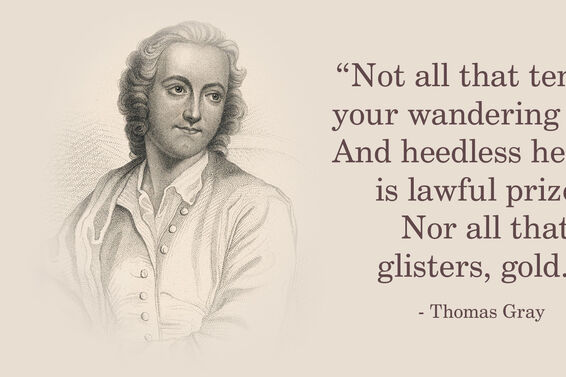
By numbers here from shame or censure free, All crimes are safe, but hated poverty. This, only this, the rigid law pursues, This, only this, provokes the snarling muse.
When I read Shakespeare I am struck with wonder That such trivial people should muse and thunder In such lovely language.
Alas! What boots it with uncessant care To tend the homely slighted Shepherd's trade, And strictly meditate the thankless muse; Were it not better done as others use, To sport with Amaryllis in the shade, Or with the tangles of Neaera's hair? Fame is the spur that the clear spirit doth raise (That last infirmity of noble mind) To scorn delights, and live laborious days; But the fair guerdon when we hope to find, And think to burst out into sudden blaze, Comes the blind Fury with th'abhorred shears, And slits the thin-spun life.
But words came halting forth, wanting Invention's stay; Invention, Nature's child, fled step-dame Study's blows Biting my truant pen, beating myself for spite, 'Fool,'said my muse to me; 'look in thy heart, and write.'
Why does my Muse only speak when she is unhappy? She does not, I only listen when I am unhappy When I am happy I live and despise writing For my Muse this cannot but be dispiriting.
Perversity is the muse of modern literature.
Then, rising with Aurora's light, The Muse invoked, sit down to write; Blot out, correct, insert, refine, Enlarge, diminish, interline.
For the first twenty years you are still growing, Bodily that is; as a poet, of course, You are not born yet. It's the next ten You cut your teeth on to emerge smirking For your brash courtship of the muse.
The tenth Muse, who now governs the periodical press.
To a historian libraries are food, shelter, and even muse.
Every poet knows the pun is Pierian, that it springs from the same soil as the Musea matching and shifting of vowels and consonants, an adroit assonance sometimes derided as jackassonance.
Webster's New World Dictionary of Quotations Copyright © 2010 by Chambers Harrap Publishers Ltd. All rights reserved. Published by Wiley, Hoboken, NJ. Used by arrangement with John Wiley & Sons, Inc.
Learn more about muse